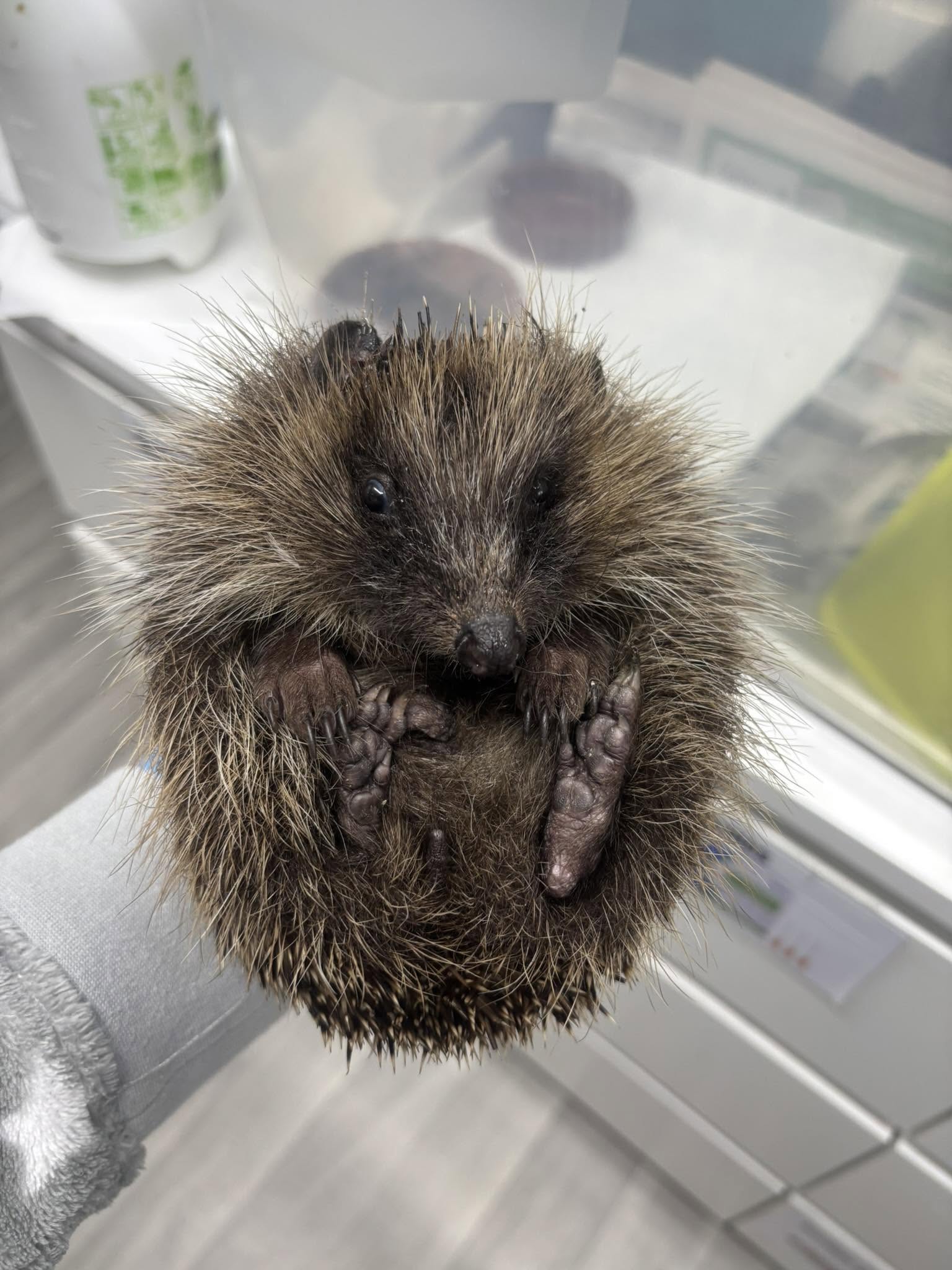
From the moment a hedgehog arrives to the day it's released back into the wild.

It usually starts with a phone call. Someone has found a hedgehog in their garden during the day, or spotted one that looks thin, wobbly or injured. That's the first sign something is wrong.
We talk them through what to do immediately, how to safely pick the hedgehog up, how to keep it warm and contained, and then we arrange to get it to the rescue as quickly as possible.
Hedgehogs that are out during the day are almost always in trouble. They're nocturnal animals, and daylight activity usually means illness, injury, poisoning or starvation. Time matters. The exception is when a hedgehog is moving with a purpose, for example carrying nesting materials could mean an expectant or new mum.
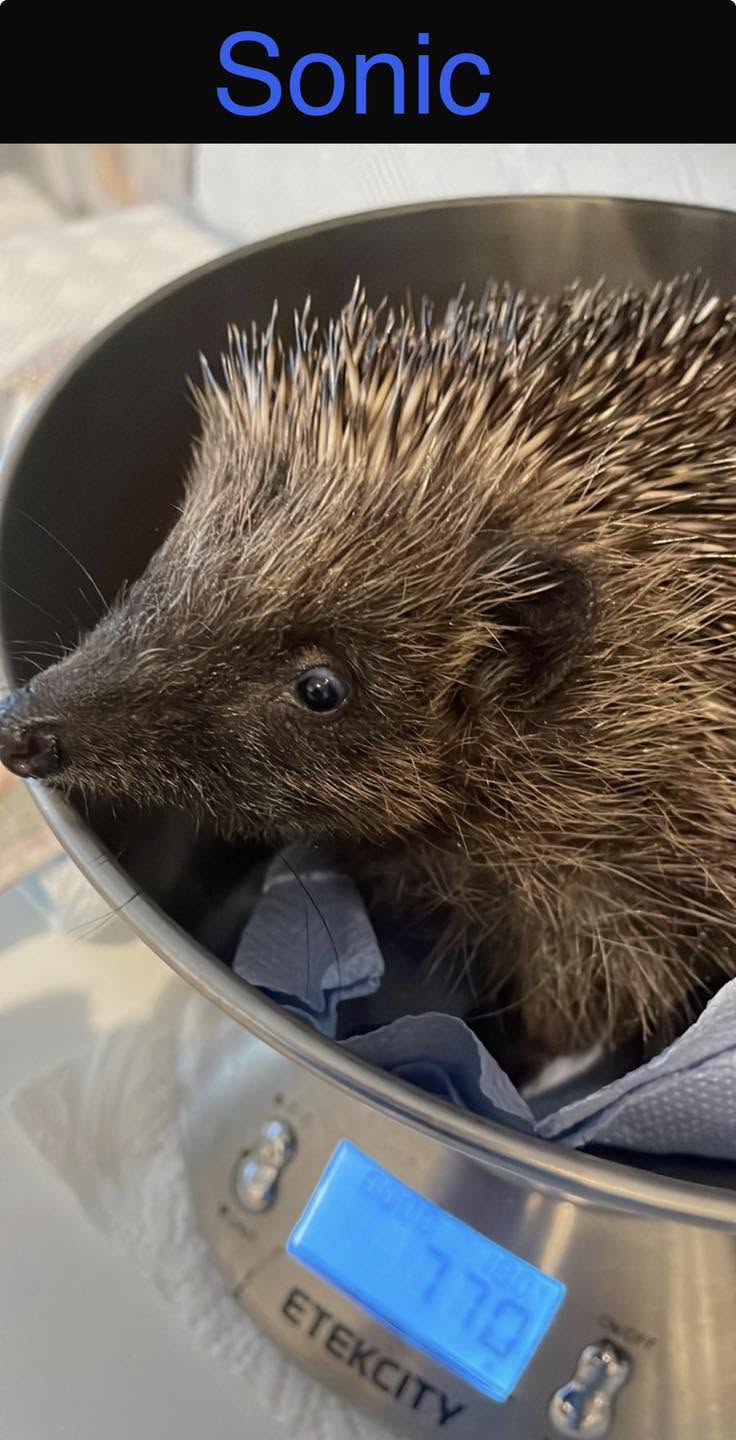
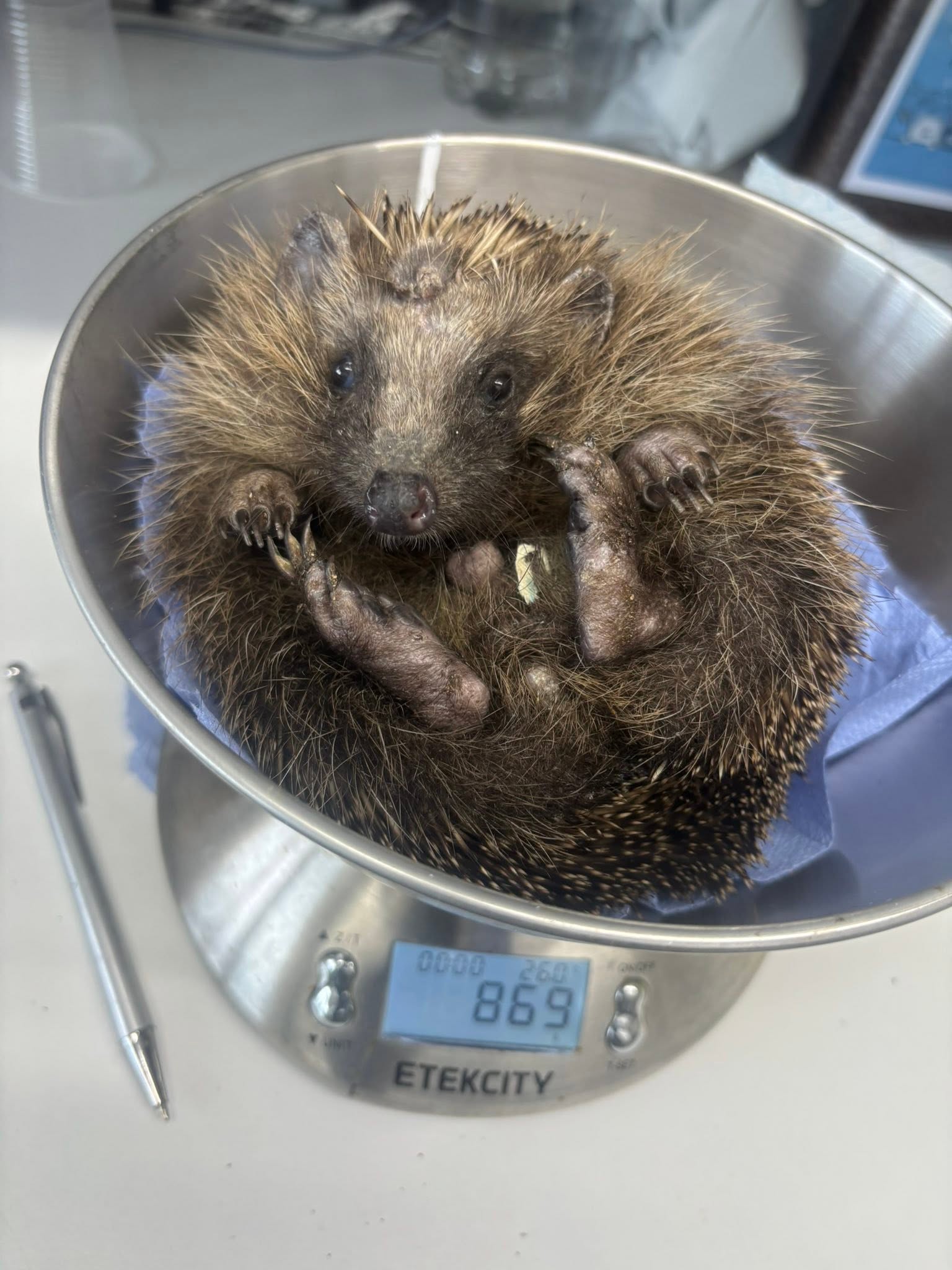
Every hedgehog that comes in gets a full assessment. We check for injuries, parasites, dehydration and weight. Many arrive underweight, riddled with internal parasites, and desperately cold.
Treatment depends on what's wrong. It might be parasite medication, wound dressing and medicated baths, hand rearing baby hoglets, antibiotics from the vet, or simply warmth, food and rest. Some hedgehogs need syringe feeding every few hours. Others just need time to build their weight back up.
Each hedgehog stays with us until it's strong enough, heavy enough and healthy enough to survive on its own. There's no rushing it. Some are with us for a few weeks, others for months.

Release day is the best day. When a hedgehog has reached a healthy weight, cleared all its treatments and is behaving like a wild hedgehog again, it's ready to go home.
We don't just release them anywhere. Ideally, we like the hedgehog to be returned to where it was found or near to it, providing it's safe to do so. If the area isn't safe, or the finder doesn't want it returning, each hedgehog goes to a carefully chosen, badger-free, hedgehog-friendly garden. The garden needs to be connected to other gardens or green spaces, have natural cover, and the homeowner needs to be committed to keeping it safe.
We recommend that you have appropriate food and a hedgehog house to help the hedgehog acclimatise to its new surroundings. We'll talk you through the process and check in afterwards. Most hedgehogs explore their new territory within the first few nights and establish a routine surprisingly quickly.
We need safe, hedgehog-friendly gardens for our rehabilitated hedgehogs. If your garden is connected to green spaces with natural cover, you could give a hedgehog its second chance.
Get in TouchIf you see a hedgehog out in the day, it's not okay. More or less 99 per cent of the time, it's not okay; it needs help.Steph Malpas, Founder
These are some of the most common reasons hedgehogs end up in our care.
Hedgehogs need to weigh at least 450g to survive hibernation, ideally 600g or more. Many arrive far below that, sometimes as low as 200-300g. We build them back up with a careful feeding plan.
Lungworm is one of the biggest killers of wild hedgehogs. Along with intestinal worms and other parasites, it causes weight loss, breathing difficulties and lethargy. Treatment takes time and careful monitoring.
Not all hedgehogs have fleas. If they do, hedgehog fleas are host-specific and won't survive on humans or other animals. If a hedgehog comes in with a tick infestation, it's usually because they're weak or ill with an underlying ailment. We treat and remove them as part of the initial assessment.
Strimmer wounds, dog bites, road injuries and garden netting entanglement are all too common. Some need vet treatment, others can be managed at the rescue with wound care.
Hedgehogs found out during the day are almost always dehydrated. Rehydration is one of the first things we do, often with subcutaneous fluids for severe cases.
Sick or underweight hedgehogs can't regulate their temperature. They arrive cold and lethargic. We warm them gradually with heat pads before attempting any feeding or treatment.
Every hedgehog we treat costs time, money and supplies. If you'd like to help keep this rescue going, even small donations make a real difference.
How to HelpIf you've found a hedgehog that needs help, we've put together a step-by-step guide on exactly what to do.